December 9, 2025
Empathy in Action: What Dementia Care Training Means at ECS
If you’ve ever watched someone you care for slip into confusion or frustration, then you understand what dementia looks like. But what does it actually feel like?
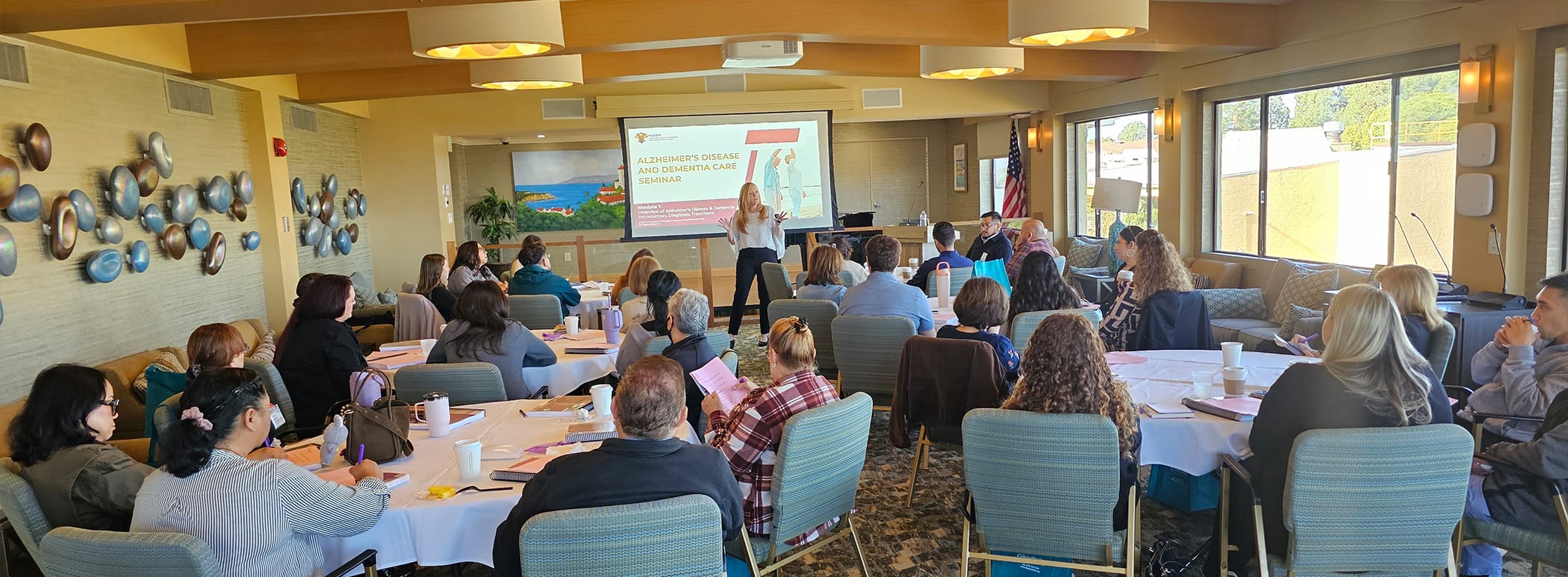
That was the question at the center of ECS’s recent multi-day, Certified Dementia Practitioner (CDP) training. This wasn’t a lecture series. Rather, it was a fully immersive training designed to shift perspectives. Team members didn’t just learn new concepts — they experienced them. The results were stronger skills, deeper empathy, and a more unified, resident-centered approach to care.
Seeing Dementia Through a New Lens
ECS hosted expert-led Dementia Care training at The Canterbury, MonteCedro, and The Covington. Lizett Leandro, Vice President of Health and Wellness, helped lead the initiative. Her history with ECS spans two decades of hands-on experience, beginning as a Certified Nursing Assistant. She then became an LVN and RN during the time that she launched The Canterbury Courtyard Memory Care. She currently holds an MSN degree and is a Nurse Practitioner in Adult Gerontology.
The goal of the training was both simple and ambitious: give team members the tools to understand the lived reality of dementia and the skills to respond with clarity and empathy.
Each session included:
- A lecture grounded in real scenarios
- An immersive simulation that reveals the sensory challenges of dementia
- A guided debrief to help convert emotion into understanding
- Practical techniques for reading behavioral expressions as communication
Lizett encouraged participants to view each reaction or outburst as a message. In her words, “Somebody who is fighting is trying to say something.” Once team members understand the cause behind a behavior, the path to support becomes clearer.
Reaching Every Corner of the Community
Dementia is increasing nationwide, and ECS sees the ripple effects daily. Even residents arriving in independent living may have early signs of cognitive impairment. Supporting these residents means preparing every department, not just clinical teams, to recognize what dementia can look like and how to respond with empathy.
The turnout showed just how much employees at all levels desire greater knowledge in this area. Leadership expected 15 participants for each session. Attendance doubled that number, and some employees came in on their day off after hearing how powerful the training had been at other communities.
The result was a cross-functional cohort of 30 newly certified dementia practitioners, including team members from:
- Nursing
- Caregiving
- Dining
- Creative Living
- Social Work
- Fitness
- Transportation
One participant, Ron from Transportation, joined to better support both residents and his father, who lives with dementia. His engagement left such an impression on the group that external trainers continued asking about him weeks later.
Walking A Mile in Residents’ Shoes
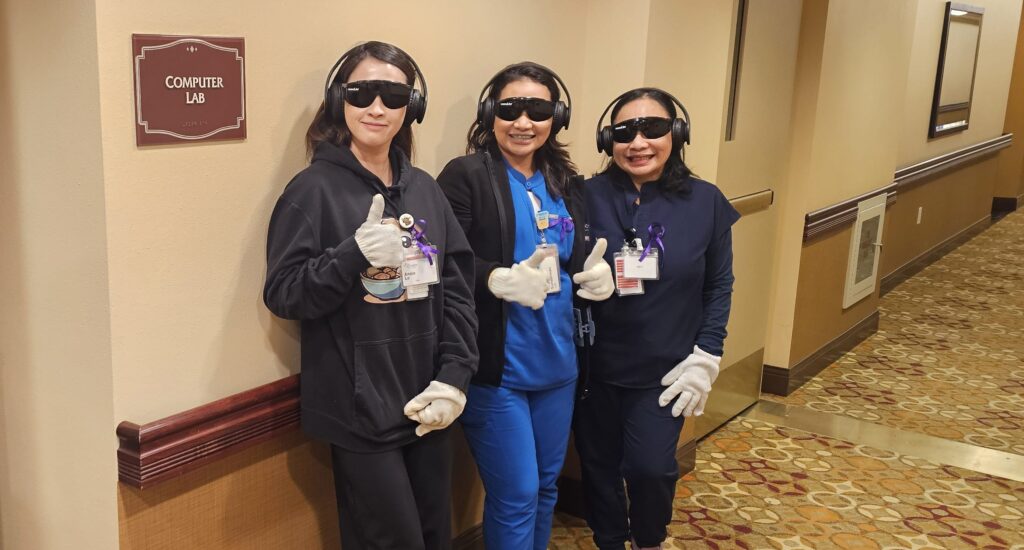
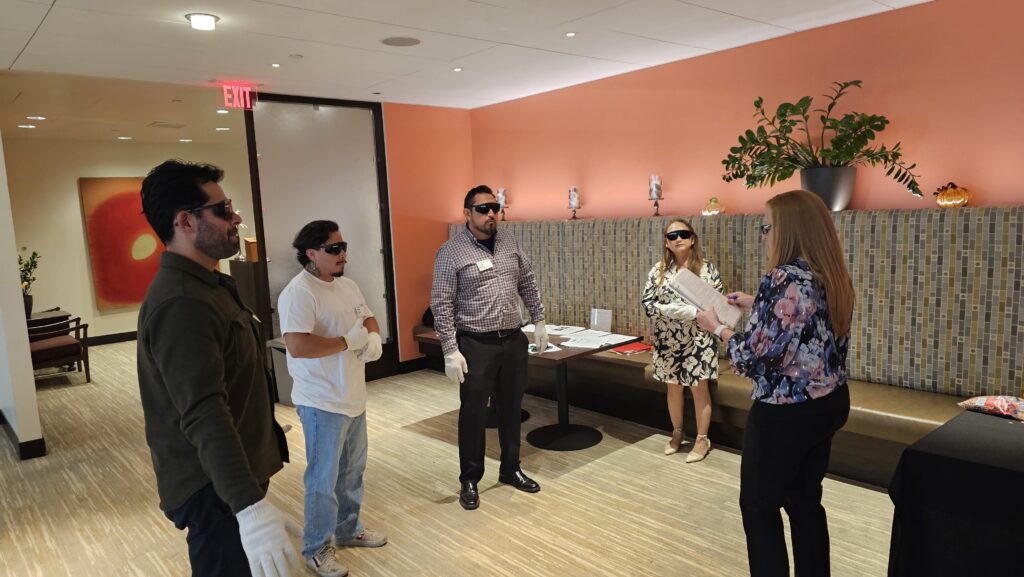
The simulation proved to be one of the most memorable parts of the training. An immersive, high-impact experience, AGE-u-cate’s Dementia Live® helps caregivers, students, and the general public step into the sensory world of dementia.
Participants were guided through daily tasks while wearing:
- Goggles simulating macular degeneration
- Headsets filled with layered dining room sounds
- Gloves that dulled tactile feedback
- Beans in their shoes to simulate neuropathy
Then they attempted basic tasks. Most could not complete more than two.
The emotional impact was immediate. One director of fitness told Lizett, “Now I know how to work with people who have a cognitive impairment.” Another participant paused after removing the gear, overwhelmed by how disorienting simple actions had felt. For him, the experience nearly brought him to tears.
These moments captured the heart of the program. In Lizett’s words, “Once you know how they feel, you’ll be more open-minded and create the tools to provide quality care.”
The Ripple Effect on the Floor
The impact of the CDP program extended well beyond the training room. Team members returned to their communities energized and eager to try new approaches. Families noticed the difference, and dining team members, drivers, and Creative Living leadership were increasingly approached with questions about dementia. Lizett often reminds teams why that shift happens.
“To the greater community, you’re an expert by the simple fact that you work at one of our communities.”
When team members elevate their skills, residents’ families feel the difference.
Moving Forward Together within a Culture of Readiness
Lizett is already partnering with the dining services team to create an additional in-person training series specifically for dining team members. Across ECS, one idea continues to guide the work: dementia education is not a niche skill. It is a core expectation for community life.
When every team member understands the reasons behind residents’ behaviors, care becomes more human and more effective. And when the team feels supported and equipped, they bring that confidence into every interaction, from the dining room to the shuttle to the fitness center. That’s why in 2026, further departments will take part, including housekeeping, management, residents, families, and even the ECS Board of Directors.
ECS continues to invest in training, collaboration, and shared learning. Each program, including this one, brings the community closer to a deeper understanding of what residents experience and what the team needs to support them well.
This is what it looks like when a community invests in its future and chooses to lead with empathy, skill, and shared understanding.
About Us
ECS is a leader in Southern California Senior Living and has been at the forefront of creating exceptional communities and services for seniors since 1923. With an enduring, nonprofit legacy of honor, compassion, generosity, and integrity, we put people first. Our independent living communities are proudly nonprofit.
Contact us today to learn more.